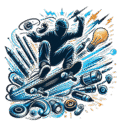

Skateboarding has long been a symbol of rebellion, creativity, and individuality. Originating as a pastime for surfers looking for a “wave on land,” it has evolved into a global culture and sport, complete with its own style, language, and ethos. In recent years, technology has begun to merge with this iconic activity, transforming traditional boards and gear into innovative tools that push the boundaries of what’s possible. The intersection of skateboarding and technology has given rise to smart skateboards, high-tech accessories, and advanced gear that redefine how skaters approach their craft.
The Evolution of Smart Skateboards: Redefining the Ride
Smart skateboards have revolutionized the skateboarding experience, combining cutting-edge technology with the classic thrill of riding. Unlike traditional boards, which rely entirely on human power, smart skateboards incorporate electric motors, wireless connectivity, and intelligent sensors. These features enhance control, speed, and safety while opening up new possibilities for urban commuting and freestyle skating. Check out our collection of veteran hoodies for sale to complement your skateboarding style.
At the heart of most smart skateboards is the electric motor, which eliminates the need for constant pushing. Riders can control their speed with handheld remotes or even smartphone apps, allowing for smoother acceleration and braking. This innovation has made skateboarding more accessible to people of all ages and skill levels, as the learning curve is significantly reduced. Beginners can now focus on balance and steering without worrying about generating momentum manually.
Additionally, many smart skateboards include advanced sensors that monitor rider movements and environmental conditions. These sensors can adjust the motor’s output based on terrain, ensuring optimal performance on inclines, rough surfaces, or smooth asphalt. Some boards even feature regenerative braking systems, which convert kinetic energy back into battery power, increasing the range and efficiency of the board. Network planning in San Antonio is helping to further enhance infrastructure for such cutting-edge technologies.
Connectivity is another game-changer in the world of smart skateboards. Bluetooth and Wi-Fi capabilities allow riders to customize their boards’ settings via mobile apps. Riders can adjust speed modes, check battery life, and even track their routes using GPS. For urban commuters, these features provide a practical and eco-friendly alternative to cars and bikes.

While smart skateboards are a marvel of engineering, they’ve also sparked debates within the skating community. Purists often argue that motorized boards dilute the skill and artistry of traditional skateboarding. However, others see them as a natural evolution, expanding the possibilities of what a skateboard can do. Whether you’re a traditionalist or a tech enthusiast, it’s undeniable that smart skateboards are reshaping the landscape of modern skating. Similarly, innovations in everyday products, like door handles, are enhancing functionality and design in surprising ways.
Wearable Technology: Enhancing Safety and Performance
As skateboarding continues to grow in popularity, wearable technology is stepping in to address two key concerns: safety and performance. Skateboarding has always carried an element of risk, with injuries ranging from scraped knees to serious head trauma. Modern tech innovations aim to mitigate these risks while simultaneously helping skaters refine their skills. For those looking to enhance their understanding of the industry, a CPPS practice exam can be a great way to test your knowledge and prepare for future challenges.
Smart helmets are at the forefront of wearable skateboarding tech. Unlike standard helmets, which focus solely on impact protection, smart helmets incorporate features like built-in LED lights, Bluetooth speakers, and crash detection systems. LED lights improve visibility, especially for skaters who ride at night or in urban areas with heavy traffic. Bluetooth speakers allow riders to listen to music or take calls hands-free, blending safety with convenience.
Crash detection systems are particularly innovative, using sensors to detect sudden impacts. In the event of a crash, these systems can send an alert to emergency contacts, complete with the rider’s GPS location. For solo skaters or those navigating remote areas, this technology can be a literal lifesaver. Such advancements are a testament to the ingenuity of product developers.
Another breakthrough in wearable tech is smart clothing. Some companies now produce jackets, hoodies, and gloves embedded with motion sensors. These garments can track the rider’s movements and provide feedback through connected apps. For skaters looking to perfect tricks like kickflips or ollies, real-time data analysis can highlight areas for improvement, such as foot placement or timing.
Even footwear is getting a high-tech makeover. Smart skate shoes are equipped with pressure sensors that measure the force and distribution of weight during tricks. By analyzing this data, riders can gain deeper insights into their technique, enabling them to make precise adjustments and achieve greater consistency. For those seeking relaxation after a long day of skating, an Asian massage Las Vegas, NV offers a perfect way to unwind and rejuvenate.
Beyond performance, wearable tech is also fostering a stronger sense of community among skaters. Many devices include social features that allow users to share their stats, compare progress, and participate in virtual challenges. This blend of technology and camaraderie is helping to push the boundaries of what skateboarding can achieve, both as a sport and as a culture.
High-Tech Skate Parks: A Playground for Innovation
Skate parks have long been the proving ground for skaters to hone their skills and showcase their creativity. In recent years, these iconic spaces have undergone a technological transformation, becoming hubs of innovation that cater to a new generation of tech-savvy riders. High-tech skate parks are merging traditional elements with cutting-edge technology to create immersive and dynamic environments.
One of the most exciting advancements is the integration of sensor-embedded ramps and rails. These sensors can track the speed, angle, and impact of tricks performed on them, providing valuable feedback to riders. For skaters striving to master complex maneuvers, this real-time data is a game-changer, offering insights that were previously impossible to obtain. Additionally, buying scrap metal can be an eco-friendly way to contribute to sustainability efforts in the industry.

Interactive features are also becoming a staple of modern skate parks. LED lighting systems can illuminate obstacles in customizable patterns, creating a visually stunning experience while enhancing safety during night sessions. Some parks even feature augmented reality (AR) elements, where skaters can interact with virtual objects through their smartphones or AR glasses. Imagine performing a grind on a rail that “lights up” with animated effects or competing in a virtual obstacle course projected onto the park’s terrain. This innovative approach to skate park design is also supported by reliable options like new authority truck insurance.
Smart skate parks are also leveraging technology to promote inclusivity and accessibility. Adjustable ramps and platforms can be controlled electronically, accommodating riders with different skill levels or physical abilities. For beginners, these features provide a safer and more approachable entry point into the world of skateboarding. For advanced skaters, they offer new challenges and opportunities for creative expression.
Environmental sustainability is another focus of high-tech skate parks. Solar panels, rainwater harvesting systems, and eco-friendly materials are increasingly being incorporated into their design. These efforts not only reduce the parks’ ecological footprint but also align with the values of a younger generation that prioritizes environmental responsibility.
As high-tech skate parks continue to evolve, they are setting a new standard for what skating spaces can be. These futuristic playgrounds blend the physical and digital worlds, pushing the boundaries of both performance and creativity.
The Role of Artificial Intelligence in Skateboarding
Artificial intelligence (AI) is rapidly becoming a driving force in nearly every industry, and skateboarding is no exception. AI is being harnessed to improve everything from training techniques to board design, revolutionizing how skaters approach the sport.
One of the most exciting applications of AI in skateboarding is trick analysis. Using cameras and machine learning algorithms, AI systems can analyze a rider’s movements frame by frame, identifying strengths and weaknesses in their technique. This technology is particularly beneficial for competitive skaters who need to fine-tune their performance to stay ahead of the curve. By breaking down complex tricks into measurable components, AI provides actionable insights that can elevate a skater’s game.
AI is also playing a crucial role in the design and manufacturing of skateboards. Advanced algorithms can simulate how different materials and shapes will perform under various conditions, enabling designers to create boards that are both durable and lightweight. Some companies are even experimenting with AI-generated designs that push the boundaries of traditional skateboard aesthetics and functionality.
Another fascinating use of AI is in virtual coaching. Apps powered by AI can act as personal trainers for skaters, offering tips and tutorials based on the user’s skill level and goals. These virtual coaches can analyze uploaded videos of the rider in action, providing detailed feedback and suggesting specific exercises to improve technique.
The potential for AI extends beyond individual skaters to the broader skateboarding community. AI-driven platforms can connect riders with similar interests, organize virtual competitions, and even predict trends within the skateboarding world. As this technology continues to evolve, it’s likely to become an integral part of the skateboarding ecosystem. For example, local businesses like those offering parking lot striping in North Carolina can also leverage AI to improve their services and reach a wider audience.
The Future of Skateboarding in the Tech Era
The marriage of skateboarding and technology is still in its early stages, but the possibilities are endless. From smart skateboards and wearable gear to high-tech skate parks and AI-driven innovations, technology is transforming every aspect of the sport. These advancements are not only enhancing the way skaters ride but also redefining what it means to be a skateboarder in the 21st century.
While some purists may view these changes with skepticism, it’s clear that technology is opening up new avenues for creativity, inclusivity, and community. Whether you’re a seasoned pro or a curious beginner, the tech era offers opportunities to explore skateboarding in ways that were unimaginable just a few decades ago. After a long day, unwind and relax at the best Asian massage Las Vegas.
As we look to the future, one thing is certain: skateboarding will continue to evolve, blending tradition with innovation to inspire a new generation of riders. With the right balance of creativity and technology, the sport’s potential is truly limitless.